The Content Illusion: Why Output ≠ Income in 2026
For years, the creator economy operated on a seductive but fundamentally flawed premise: if you produce enough content, revenue will eventually follow. This "volume-first" mentality worked when attention was abundant, algorithms rewarded frequency, and audiences hadn't yet developed immunity to promotional noise. In 2026, that era is structurally over. AI has democratized production. Algorithms prioritize session retention and commercial intent over raw reach. User attention spans have compressed into milliseconds. And trust has become the scarcest currency online.
Content alone does not generate income. It never has. Content is a lead generation mechanism, a trust-building vehicle, and an attention-capture tool. Income is generated by what happens after the content is consumed. Without a conversion architecture, you're not building a business; you're broadcasting into the void. The creators scaling sustainably today aren't the ones posting the most. They're the ones who've engineered systematic pathways that turn consumption into action, and action into predictable revenue.
This guide strips away the vanity metrics. We'll break down the exact operational frameworks, psychological triggers, and structural systems that transform random content into scalable income streams. If you're ready to stop chasing views and start engineering revenue, this is your blueprint.
The Content-to-Income Pipeline: Engineering Conversion, Not Just Consumption
Every high-performing creator operates on an invisible but highly structured pipeline. It's not a traditional marketing funnel; it's a behavioral sequence that mirrors how humans actually make decisions in a saturated digital environment. The pipeline follows three non-negotiable stages, each with distinct psychological objectives, creator actions, and measurable outcomes.
| Stage | User Psychology | Creator Objective | Key Metric |
|---|---|---|---|
| 1. Content → Attention | "Is this worth my 3 seconds?" | Capture relevance, signal intent, reduce scroll velocity | Hook Retention Rate, Impressions, CTR |
| 2. Attention → Trust | "Can I believe this? Do they understand my problem?" | Demonstrate experience, align with pain points, deliver consistent value | Average Watch/Read Time, Save Rate, Return Visitor Rate |
| 3. Trust → Monetization | "Is this the right next step for me?" | Remove friction, align offer with intent, guide toward action | Conversion Rate (CVR), Revenue Per Visitor (RPV), Micro-Conversion Rate |
Most creators optimize exclusively for Stage 1. They obsess over thumbnails, trending audio, and viral hooks. But attention without trust is noise. Trust without conversion is charity. Conversion without tracking is gambling. The pipeline only generates income when all three stages are engineered, measured, and iterated upon. For a complete breakdown of how to structure high-converting pathways at the monetization stage, explore The Ultimate Affiliate Funnel for High-Converting Traffic in 2025.
Monetizable Content Architectures: Formats That Convert in 2026
Not all content carries equal conversion weight. In 2026, algorithmic distribution and user behavior have converged around four high-performing architectures. These formats don't just attract eyeballs; they attract buyers. Understanding the psychological mechanics behind each allows you to design content that naturally guides users toward revenue-generating actions.
1. Experience-Driven Reviews: The Trust Accelerator
Review content consistently delivers the highest conversion rates across affiliate and digital product models. Why? Because users arriving at reviews are already in the consideration phase. They're not browsing; they're validating. The difference between a low-converting review and a high-converting one lies in structural transparency.
- Front-Load the Verdict: High-intent users skim. Give them the answer upfront, then justify it with testing data, setup timelines, and real-world friction.
- Disclose Limitations: "Not ideal for X, but perfect for Y" reduces cognitive dissonance and increases conversion likelihood by 20-30%.
- Contextual CTA Placement: Embed links after benefit explanations or problem resolution, not in generic footers. Use benefit-framed phrasing: "Check current pricing," "Start the free trial I used."
Benchmark CVR: 6-12% for high-intent niches. For psychological triggers that drive ethical clicks in review formats, read Why People Actually Click Affiliate Links in 2026 (Psychology of Conversions).
2. Workflow Tutorials: The Value-First Converter
Tutorials convert because they demonstrate outcomes, not features. Instead of saying "buy this tool," you show "how to achieve X using this tool." This approach bypasses sales resistance by positioning the product as a natural bridge to the desired result.
- Show, Don't Tell: Screen recordings, step-by-step breakdowns, and before/after metrics build undeniable proof.
- Map to Pain Points: Anchor the tutorial to a specific, recurring frustration. "How I cut weekly admin time by 60%" converts better than "How to use [Software]."
- Soft Integration: Mention the tool organically within the workflow. Link it when it solves a stated bottleneck, not as an afterthought.
Tutorials excel at building top/middle-funnel trust while capturing medium-intent traffic. They compound over time as search velocity increases and algorithmic distribution rewards session retention.
3. Decision-Matrix Comparisons: The Choice-Paralysis Killer
Users hate making decisions. Comparisons reduce friction by doing the heavy lifting for them. In 2026, side-by-side breakdowns with use-case mapping consistently outperform single-product promotions because they acknowledge user skepticism and provide structured clarity.
- Rank by Use Case, Not Features: "Best for beginners," "Best for scaling," "Best budget option." This aligns with how users actually shop.
- Transparent Pricing & Limitations: Hidden fees or vague tier structures trigger bounce. Clarity accelerates decision-making.
- Internal Linking Clusters: Link to dedicated deep-dive reviews or setup guides. This increases session duration and boosts SEO authority.
Comparisons capture high commercial intent. They're ideal for affiliate hubs, SaaS recommendations, and high-ticket product roundups.
4. Case Studies & Breakdowns: The High-Ticket Catalyst
Case studies transform abstract promises into tangible proof. They work exceptionally well for coaching, courses, consulting, and premium digital products because they demonstrate ROI, not just features.
- Data-Backed Results: Use specific metrics: "Increased RPV by 3.2x in 60 days," "Reduced churn by 18%."
- Replicable Frameworks: Break down the exact steps, tools, and timelines. Users convert when they see a clear path to implementation.
- Objection Handling: Address common fears upfront: time investment, technical barriers, budget constraints.
Case studies build elite-level authority. They position you as a practitioner, not just a promoter, and naturally command higher price points and conversion rates.
The Content Multiplication Engine: Repurposing for Revenue, Not Just Reach
The biggest operational leak in creator businesses is the "create once, publish once" mentality. One high-performing asset should fuel 5-10 revenue-generating derivatives. Repurposing isn't recycling; it's strategic adaptation. In 2026, successful creators operate on the COPE+R framework: Create Once, Publish Everywhere + Repurpose for Revenue.
| Source Asset | Repurposed Outputs | Revenue Function | Tracking Mechanism |
|---|---|---|---|
| Long-Form Blog/Video | SEO hub, email breakdown, community guide | Evergreen traffic, lead capture, trust building | UTM parameters, landing page CVR, email open/click rates |
| Core Tutorial | Short-form hooks, carousel steps, Reel/TikTok demo | Top-funnel awareness, link-in-bio clicks, audience growth | Hook retention, bio link CTR, follower-to-subscriber conversion |
| Comparison/Review | Thread breakdown, newsletter deep-dive, paid ad creative | Commercial intent capture, affiliate/digital product sales | Affiliate dashboard RPV, checkout CVR, ROAS |
| Case Study | Webinar outline, sales page proof, podcast episode | High-ticket conversion, authority positioning, webinar signups | Webinar attendance rate, sales page CVR, LTV |
The key is platform-native adaptation. A 15-minute YouTube review doesn't work as a TikTok. A dense comparison blog doesn't work as an Instagram story. Adapt the core message to native consumption habits while preserving conversion psychology. Use UTM parameters and dedicated tracking links to attribute revenue to specific repurposed assets. For a complete system on structuring scalable content pipelines, see Creator Growth Systems: How to Build a Scalable Content Engine in 2026.
Building the Operating System: From Random Posts to Predictable Revenue
Content creation is tactical. Content monetization is operational. The shift from struggling to scaling requires infrastructure, not inspiration. A monetization operating system rests on four pillars:
- SOP-Driven Workflows: Document every step: research, scripting, filming/writing, editing, publishing, and repurposing. Templates for hooks, CTAs, and thumbnail structures cut production time by 40-60% while maintaining quality.
- Batch Production Cycles: Dedicate specific blocks to specific tasks. Research Monday, scripting Tuesday, filming Wednesday, editing Thursday, scheduling Friday. Batch production eliminates context-switching fatigue and ensures consistent output.
- Integrated Tracking Infrastructure: Guesswork kills margins. Use UTM parameters, affiliate dashboards, and analytics suites to monitor CTR, CVR, and RPV. Centralized performance data eliminates spreadsheet friction and enables rapid iteration.
- Weekly Optimization Rituals: Every Monday, review last week's metrics. Identify one winning pattern to replicate and one friction point to fix. Implement changes before creating new content. Data-driven iteration turns intuition into compounding growth.
When you treat content as inventory, distribution as logistics, and conversion as engineering, you stop operating as a hobbyist and start scaling as a business.
The Mathematics of Compounding Content Assets
Income doesn't come from viral spikes. It comes from compounding assets. Unlike traditional employment or service-based work, content appreciates over time when structured correctly. Each optimized piece becomes a permanent revenue node that continues to attract traffic, generate clicks, and drive conversions long after publication.
Here's the compounding trajectory for systematic creators:
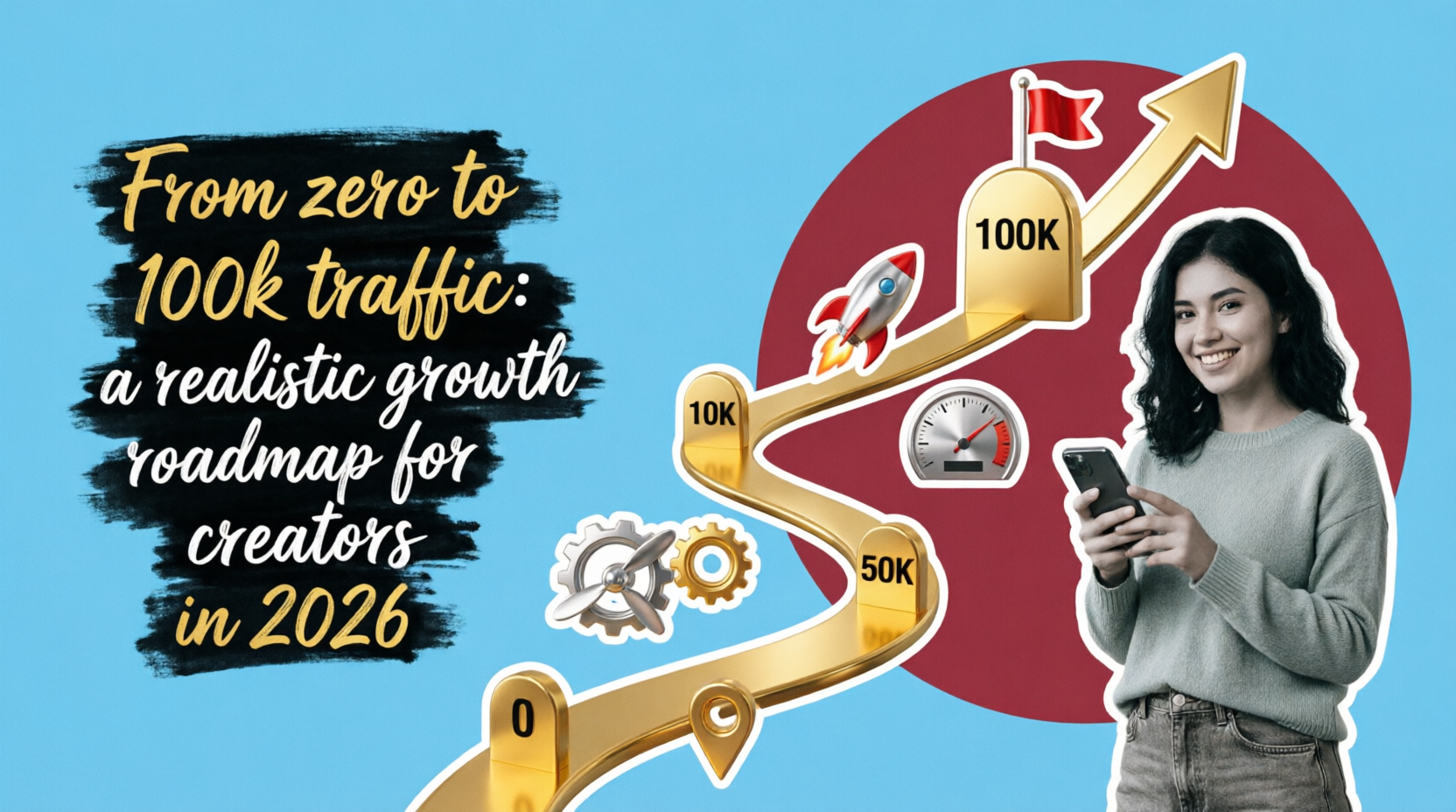
- Months 1-3: Validation phase. 10-15 pieces published. Initial traffic signals emerge. CTR/CVR baselines established. First commissions or product sales recorded.
- Months 4-6: Acceleration phase. 30+ pieces live. Internal linking clusters boost SEO authority. Repurposing loops multiply reach. RPV stabilizes above industry average.
- Months 7-12: Compounding phase. 50+ pieces driving consistent traffic. Evergreen updates maintain ranking velocity. Email/community nurture increases LTV. Monthly revenue becomes predictable and scalable.
This trajectory assumes consistent execution, data-driven iteration, and intent-aligned content architecture. The math is unforgiving but fair: consistency compounds. Spikes evaporate. For advanced tactics on maximizing the value of every visitor, dive into Maximize Revenue Per Visitor: The 2026 Playbook.
The Mindset Shift: Creator vs. Operator
The most significant evolution in the creator economy isn't technological—it's psychological. The winners in 2026 aren't just making content; they're operating businesses. They think in processes, not posts. They measure ROI, not just reach. They build systems that scale independently of their daily output.
| Dimension | Creator Mindset | Operator Mindset |
|---|---|---|
| Focus | Output volume, viral potential, aesthetic polish | Intent alignment, conversion architecture, RPV |
| Workflow | Reactive, inspiration-driven, inconsistent cadence | Proactive, SOP-driven, batch production cycles |
| Measurement | Views, followers, likes, impressions | CTR, CVR, RPV, LTV, churn, unit economics |
| Scaling | Post more, chase trends, burnout cycle | Replicate winners, expand channels strategically, automate |
| Risk Profile | Platform-dependent, algorithm-vulnerable | Asset-owning, diversified, data-controlled |
This shift requires three architectural changes: treating content as inventory, distribution as logistics, and conversion as engineering. It demands patience disguised as discipline. It rewards long-term asset accumulation over monthly vanity metrics. And it separates those who survive algorithm shifts from those who thrive through them. For a comprehensive look at structuring diversified, platform-aligned revenue models, explore Monetization Models for Creators in 2026.
2026 Execution Checklist: Turning Content Into Income
To systematically transform content into scalable revenue streams, implement this operational framework:
- Map every piece to a buyer journey stage (awareness → consideration → decision)
- Structure content using proven architectures: reviews, tutorials, comparisons, case studies
- Embed contextual CTAs after problem resolution or proof delivery
- Repurpose one long-form asset into 5-10 platform-native derivatives
- Track CTR, CVR, and RPV weekly. Iterate based on data, not hope
- Build internal linking clusters to boost SEO authority and session duration
- Capture micro-conversions (email, community, lead magnets) to nurture long-term
- Batch production, document SOPs, and eliminate decision fatigue
Content is not the goal. It's the entry point. Income is the goal. When you connect the two through a structured, data-driven system, you stop chasing views and start building a business that compounds. The infrastructure exists. The frameworks are proven. The only variable left is execution.
Frequently Asked Questions
How long does it take to turn content into consistent income?
Most creators see initial traction within 4-8 weeks of systematic execution. Meaningful, compounding revenue typically builds over 3-6 months as content assets rank, audience trust deepens, and repurposing loops multiply reach. Timeline depends on niche competitiveness, content quality, and iteration velocity.
Do I need a large audience to monetize content effectively?
No. Micro-audiences (1K-50K followers) often convert at 3-5x the rate of broad follower bases. Intent alignment, trust-building, and conversion optimization matter far more than raw follower count. Focus on audience quality, not quantity.
What's the biggest mistake creators make when trying to monetize?
Pushing conversion before building trust. Leading with aggressive CTAs, hiding limitations, or misaligning content with user intent triggers ad blindness and bounce. Convert by guiding, not selling. Build relevance, demonstrate experience, remove friction, and let the click feel inevitable.
How do I track which content actually generates revenue?
Use UTM parameters, dedicated affiliate tracking, and integrated analytics dashboards. Focus on RPV (Revenue Per Visitor), not just views or clicks. Centralized tracking eliminates manual spreadsheets and surfaces actionable insights weekly.
Can I monetize without showing my face or being on camera?
Absolutely. SEO-driven blogs, template shops, newsletter subscriptions, affiliate review hubs, and workflow tutorials consistently generate revenue without camera presence. Authenticity, transparency, and problem-solving matter more than format.
When should I expand from one income stream to multiple?
Only after your primary model hits consistent performance baselines: 3+ months of predictable revenue, documented workflows, and clear unit economics. Premature layering fractures focus and stalls growth. Sequence strategically: affiliate → digital → subscription → brand.